


April can feel like a bit of a juggling act. Between spring fever, unpredictable weather, indoor recess, Easter, Earth Day, and everything in between, there’s a lot going on. That’s why I love having a spring read-alouds that are fun, purposeful, and easy to plan around.
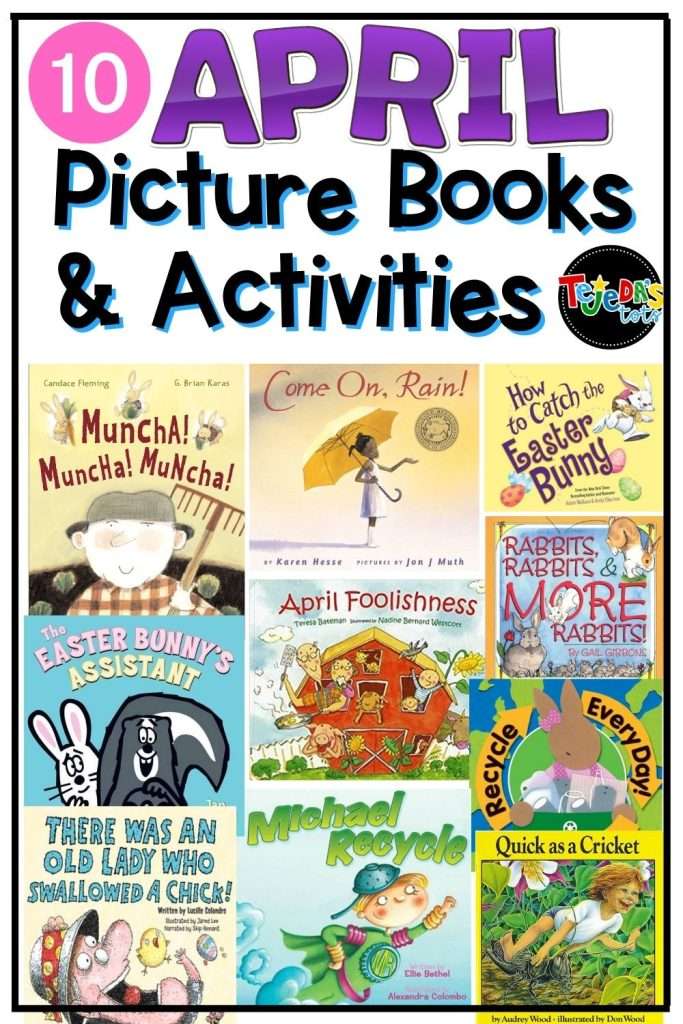
In this post, I’m sharing 10 of my favorite April read alouds that are just right for kindergarten and first grade. From silly bunny stories to Earth Day reads to a nonfiction book about rabbits, there’s a nice mix here to keep things fresh all month long.
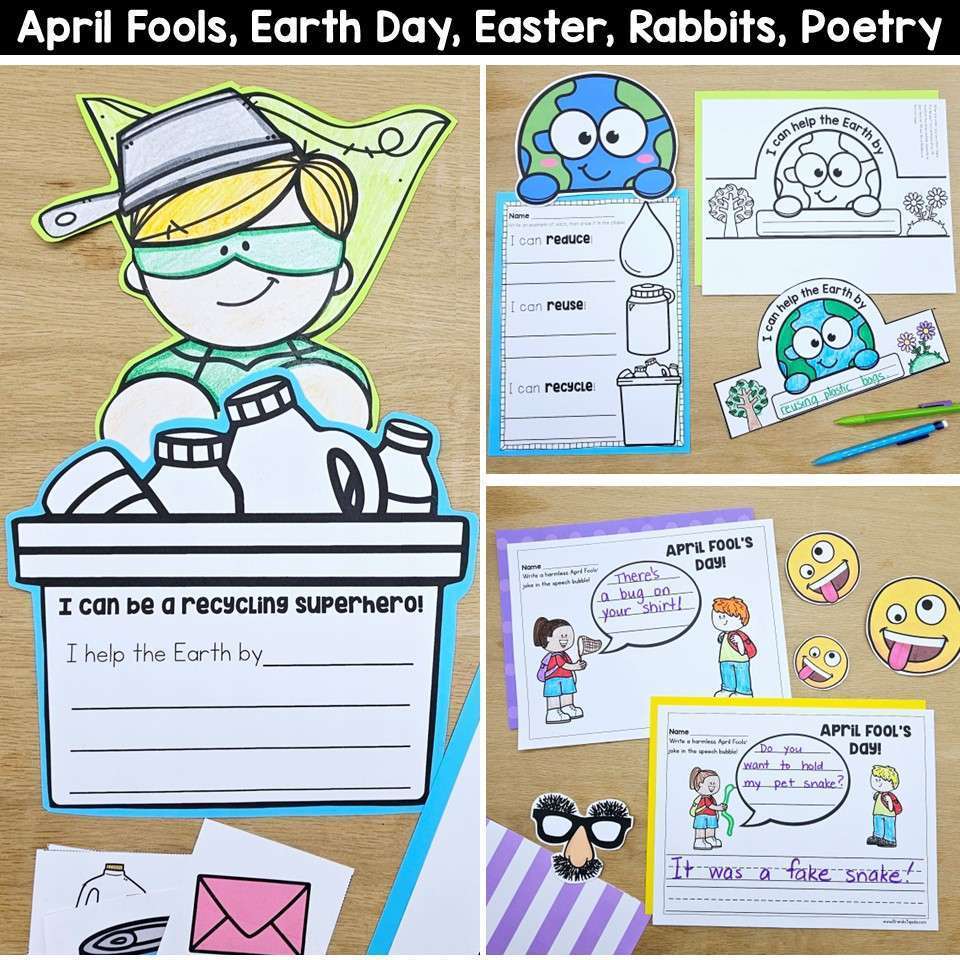
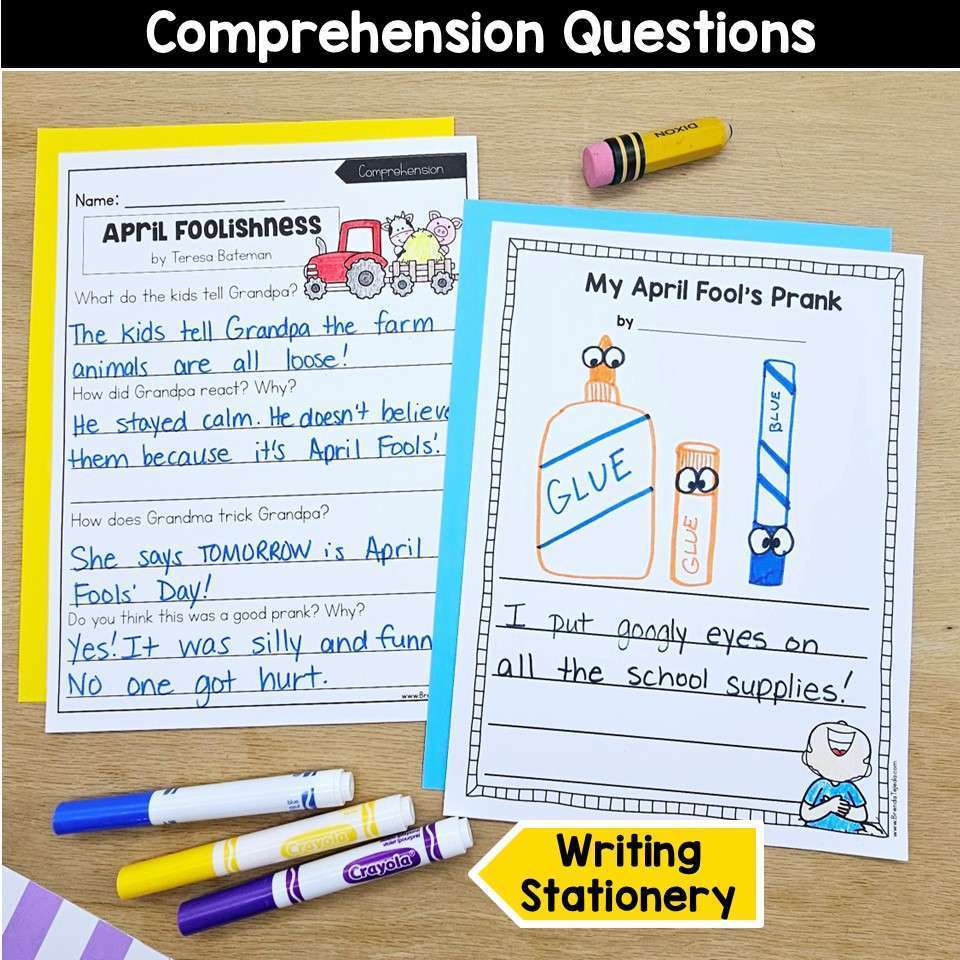
And if you’re looking to make planning even easier, my April Read Alouds Pack includes comprehension, writing activities, and crafts for all 10 books—ready to go when you are.
You can click on each title or view this April picture book list HERE.
This post contains affiliate links, which means I may earn a small commission if you buy through them—at no extra cost to you.
1. Muncha! Muncha! Muncha! by Candace Fleming
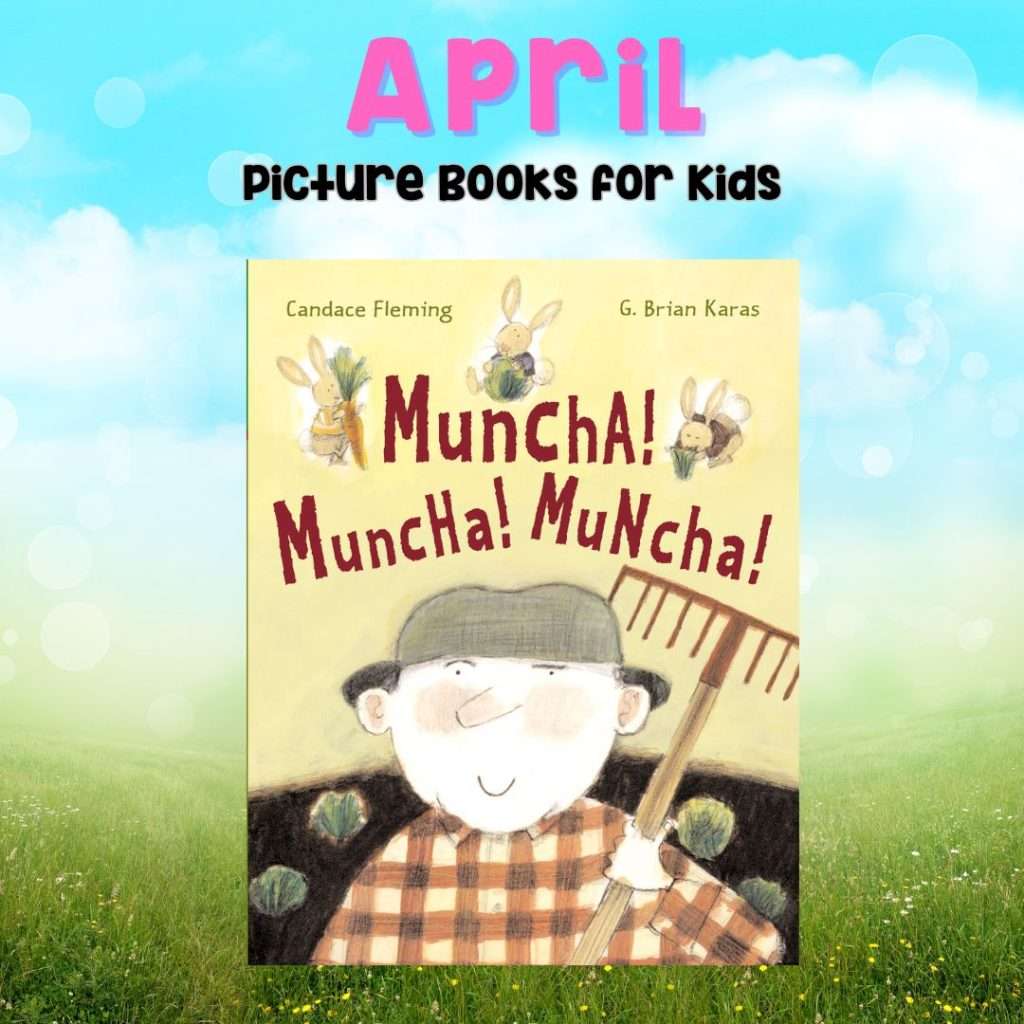
This one’s always a favorite. Three sneaky bunnies keep sneaking into Mr. McGreely’s new garden to eat his carrots, despite all his attempts to stop them. I love the ending! It’s great for so many comprehension skills, including sequencing, BME, and how character feelings change.
Follow-up ideas:
- Have students invent and draw their own “bunny-proof” garden traps—expect some very creative solutions.
- Discuss facts vs opinions and see if students are on Team McGreely or Team Bunnies!
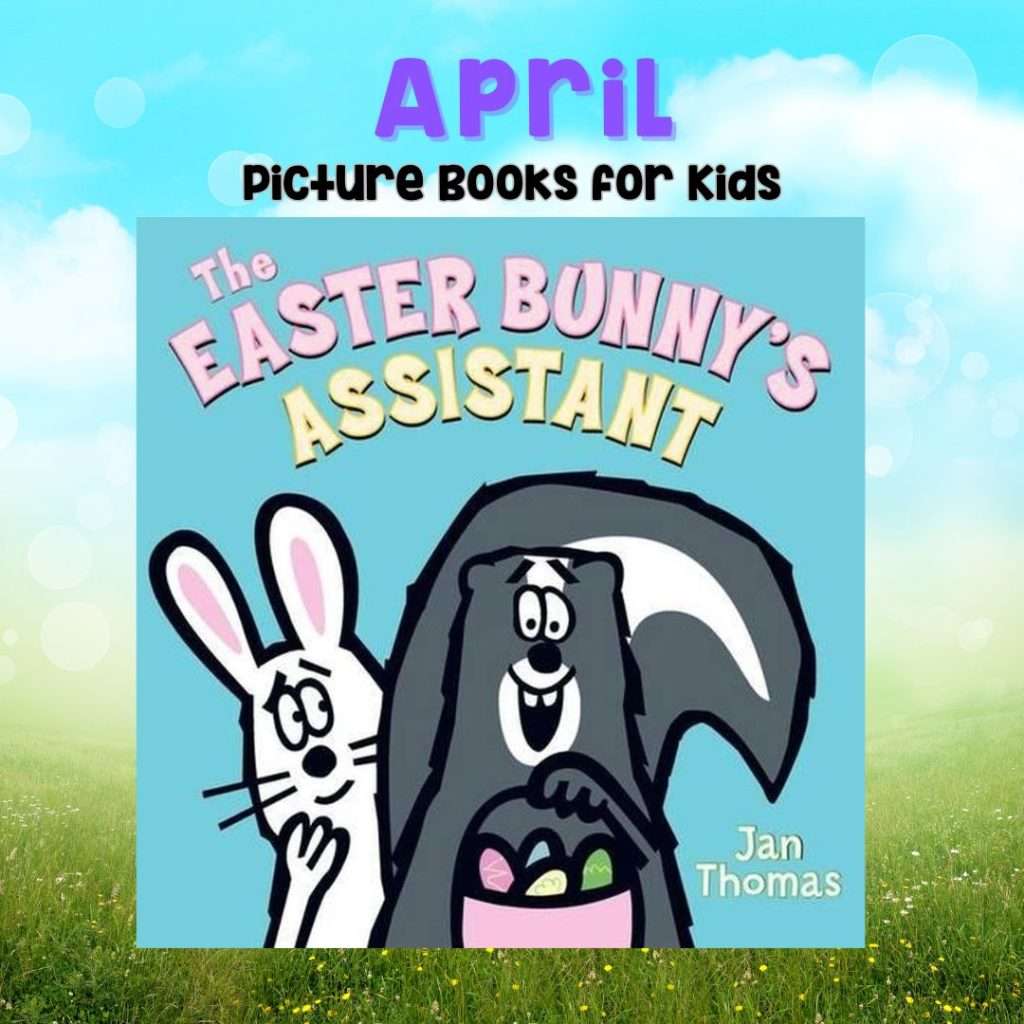
2. The Easter Bunny’s Assistant by Jan Thomas
Your students will LOVE this one because well, it’s a little suggestive of passing gas. 😂 Skunk and E.B. are decorating eggs but when Skunk gets excited, he, ahem, lets out a bad smell! This always gets a laugh, and extra motivation to act it out! haha
Follow-up ideas:
- Write how-to books for decorating eggs! Make a HOW-TO kit with plastic eggs, cups, and dye for kids to act out the steps!
- Students can write their own job application to be the Easter Bunny’s new assistant—with some creative qualifications!
3. How to Catch the Easter Bunny by Adam Wallace
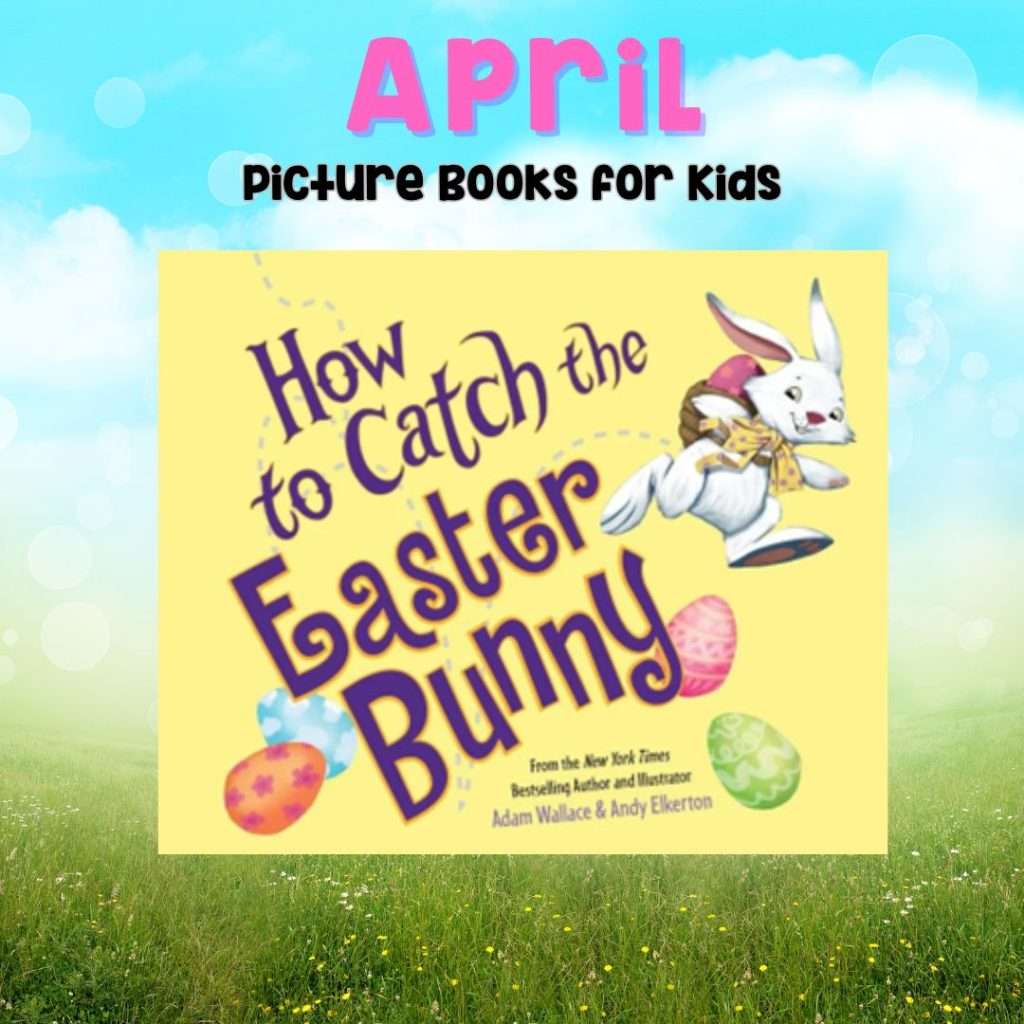
The bunny traps get wilder on each page, and students will love predicting and coming up with their own ideas. This one also works well with a quick writing or STEM extension.
Follow-up ideas:
- Of course, this one’s also great for planning bunny traps! But my favorite is a class bunny egg hunt! See below.
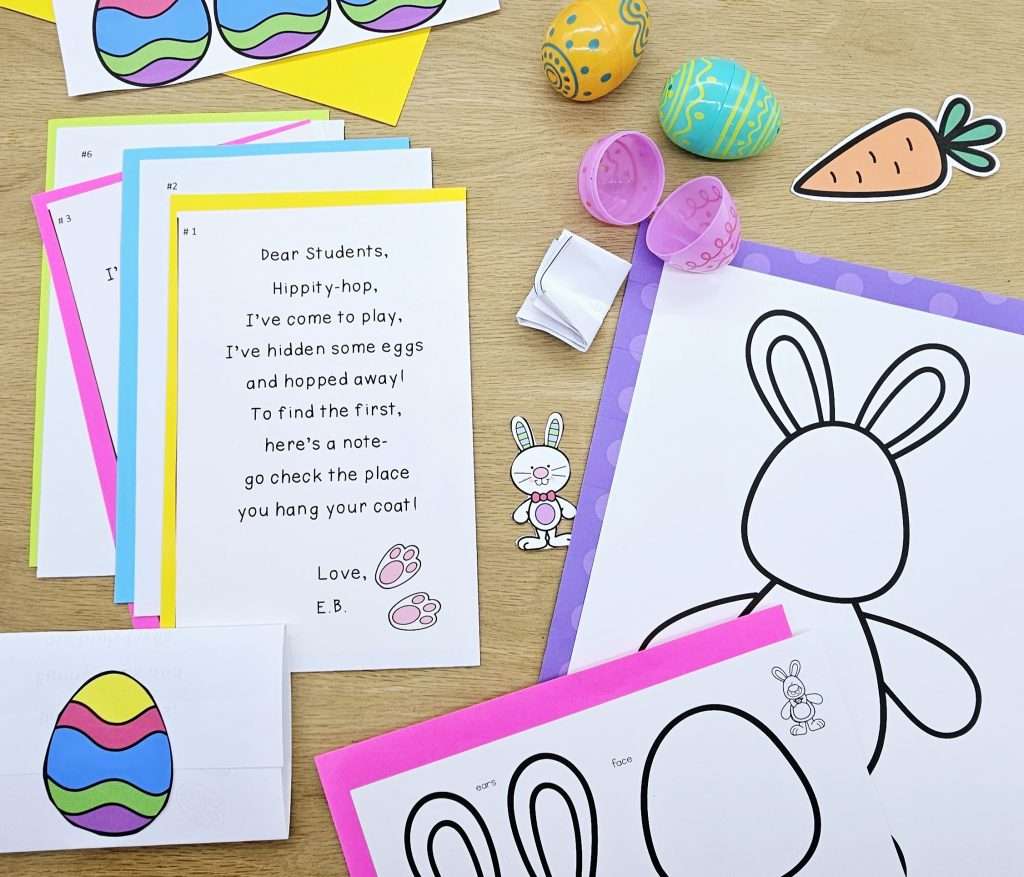
Bunny Egg Hunt
Like our gingerbread and leprechaun hunts, we first make a class bunny, who “hops away” while the kids are out of the classroom, leaving fun poem clues behind. When kids return, they can make WANTED posters to find him or you can go right into the hunt.
Fold the notes into plastic eggs to make it extra fun and call on students to look for the eggs in each hiding spot.
4. There Was an Old Lady Who Swallowed a Chick by Lucille Colandro
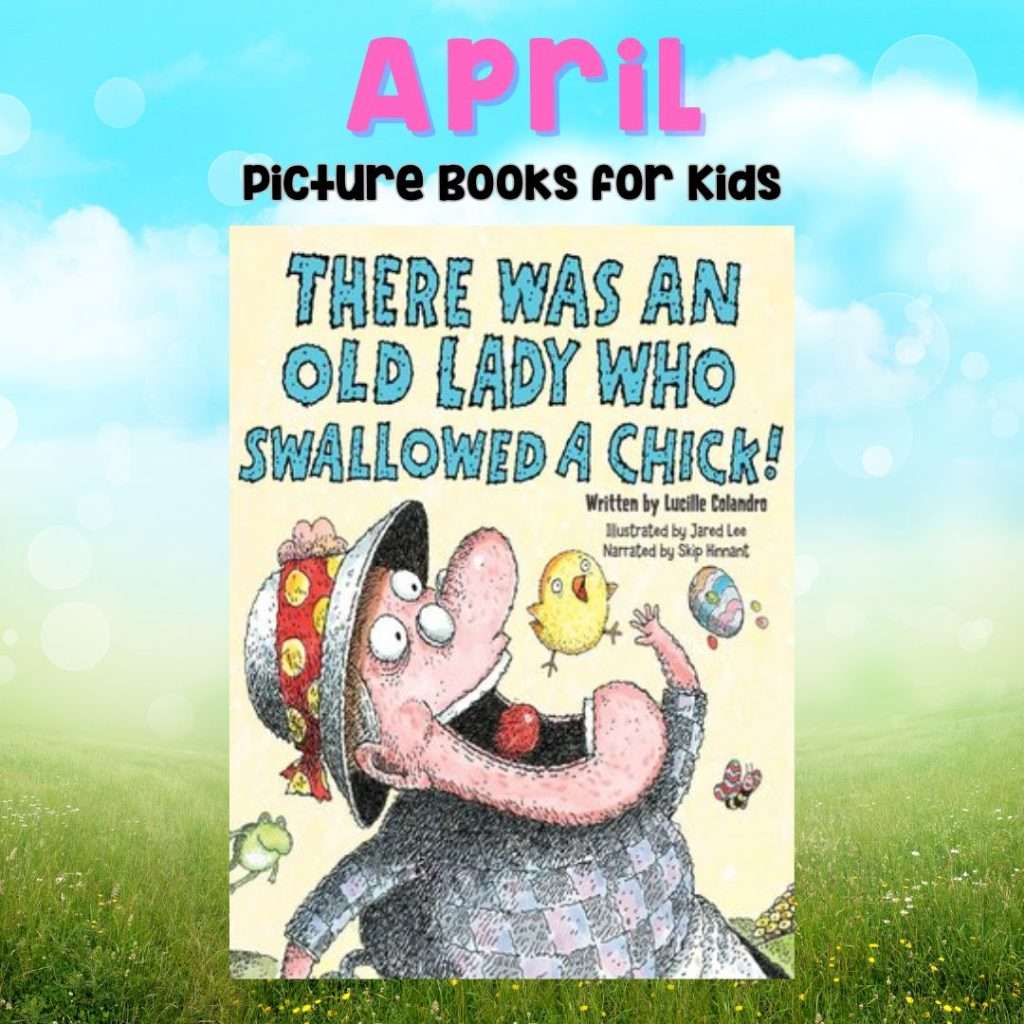
This spring version of the classic series is great for practicing sequencing and retelling. The predictable, rhyming text makes it easy for students to join in—and they’ll probably ask to read it again.
Follow-up ideas:
Create a class version with a new theme—maybe she swallows things for a spring picnic or a rainy day!
Retell the story using picture cards or stick puppets.
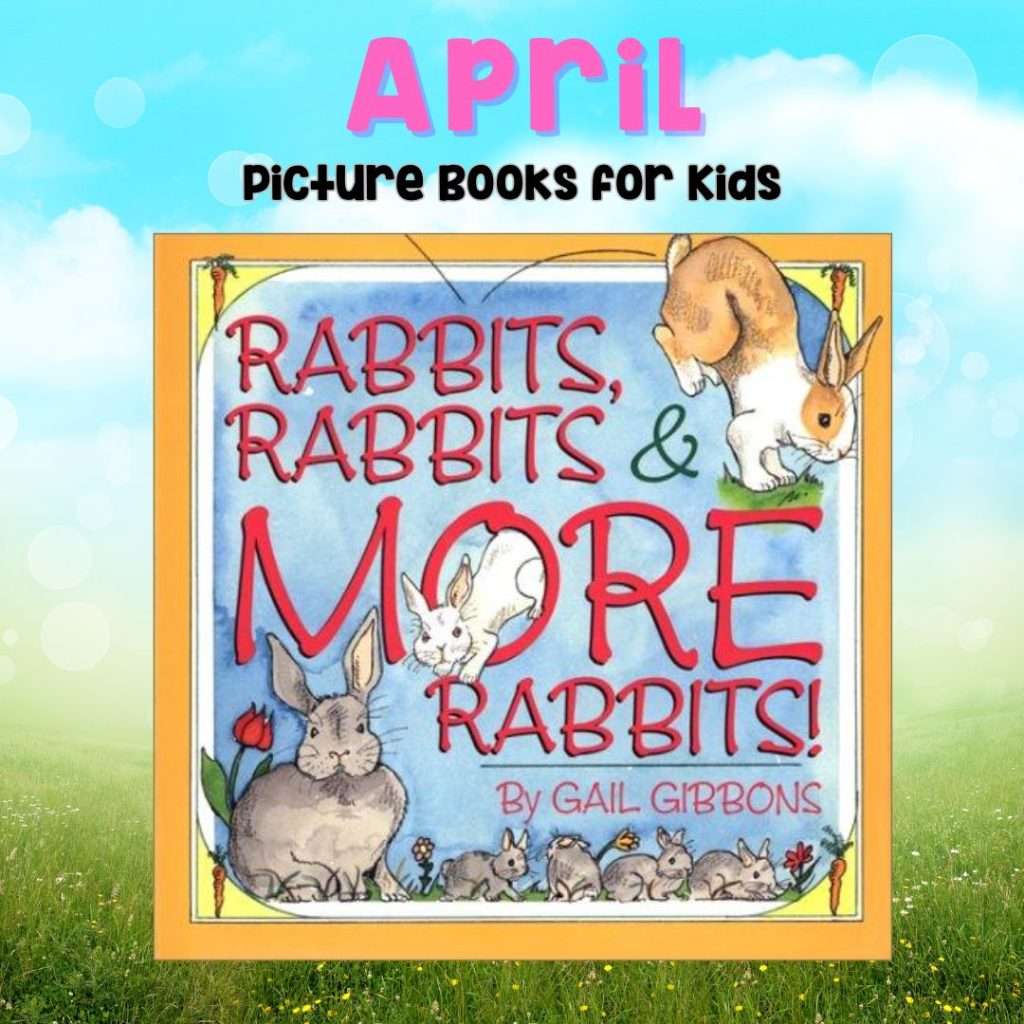
5. Rabbits, Rabbits, and More Rabbits by Gail Gibbons
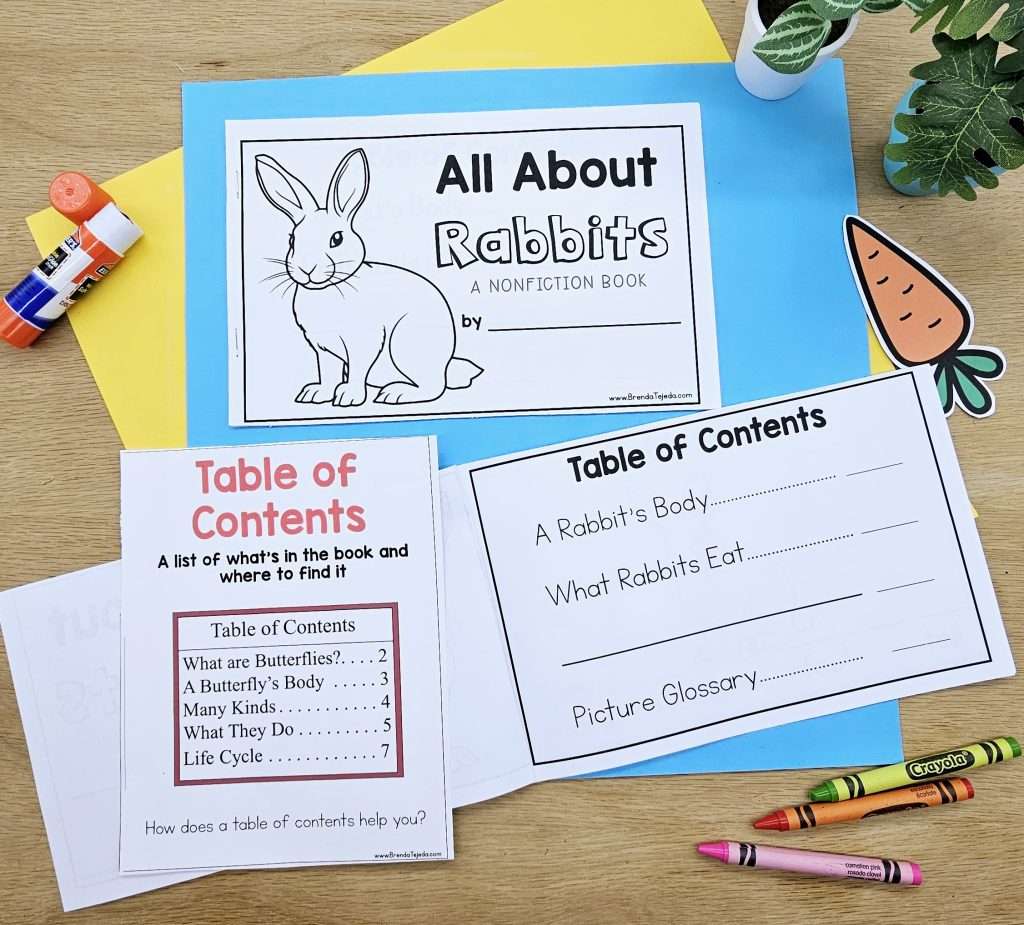
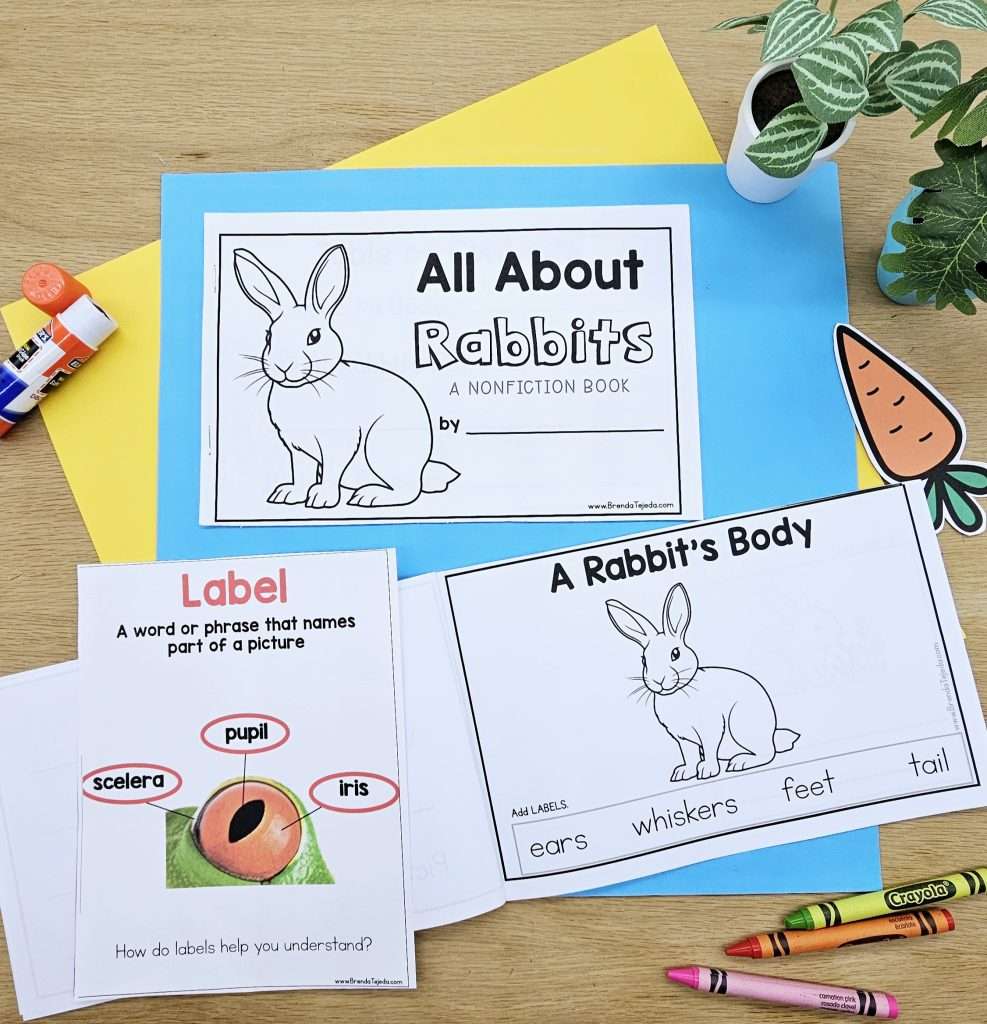
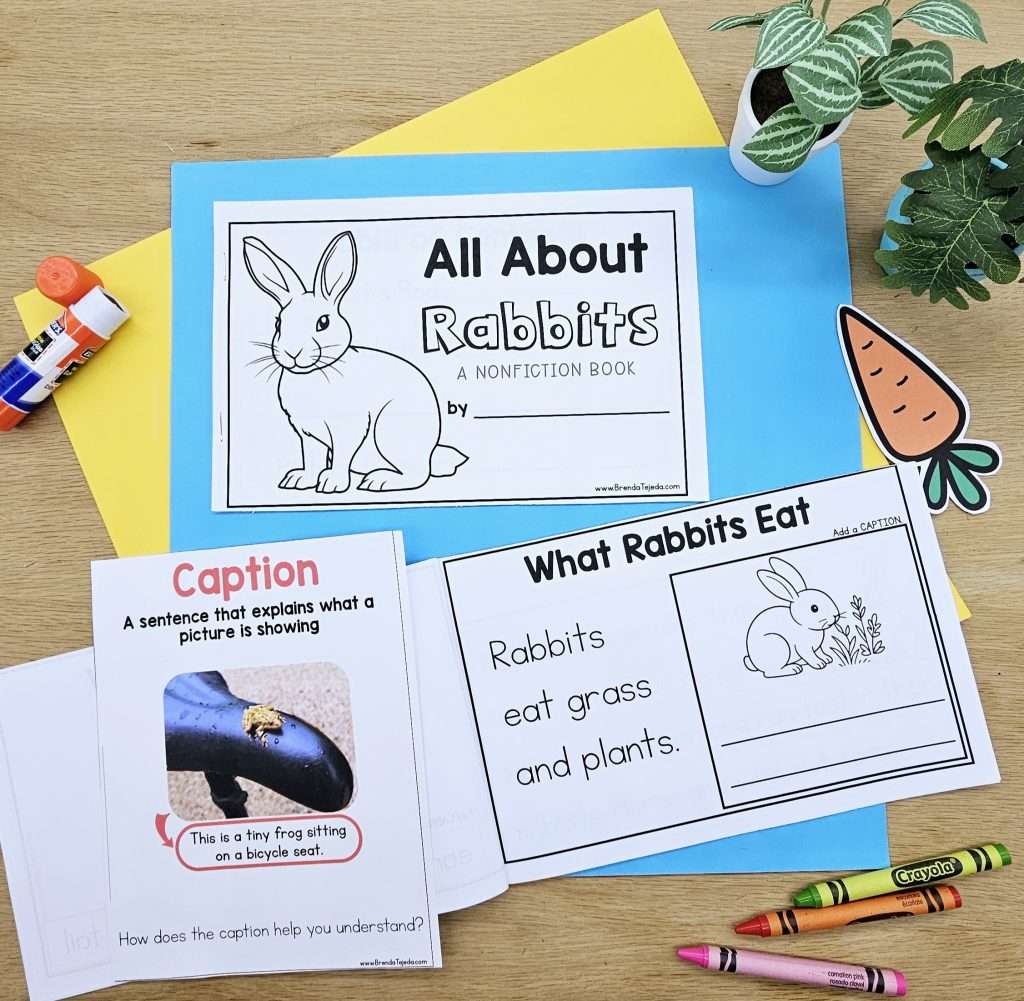
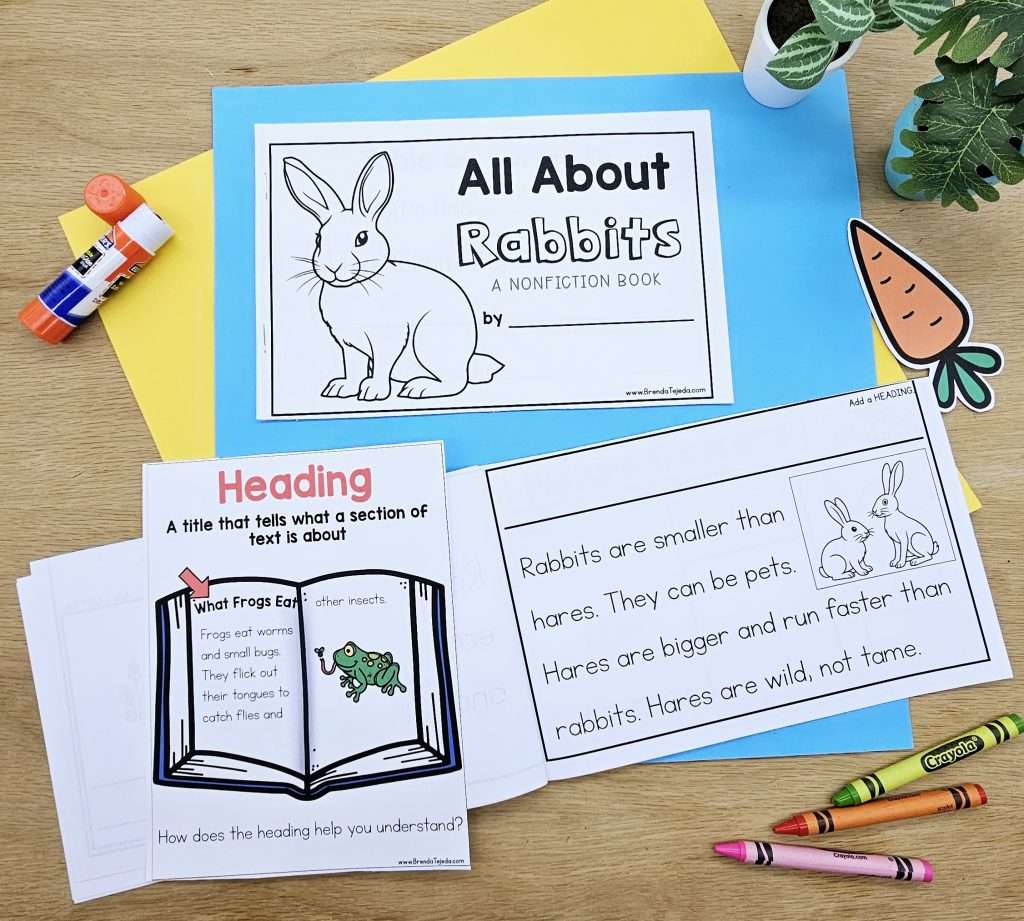
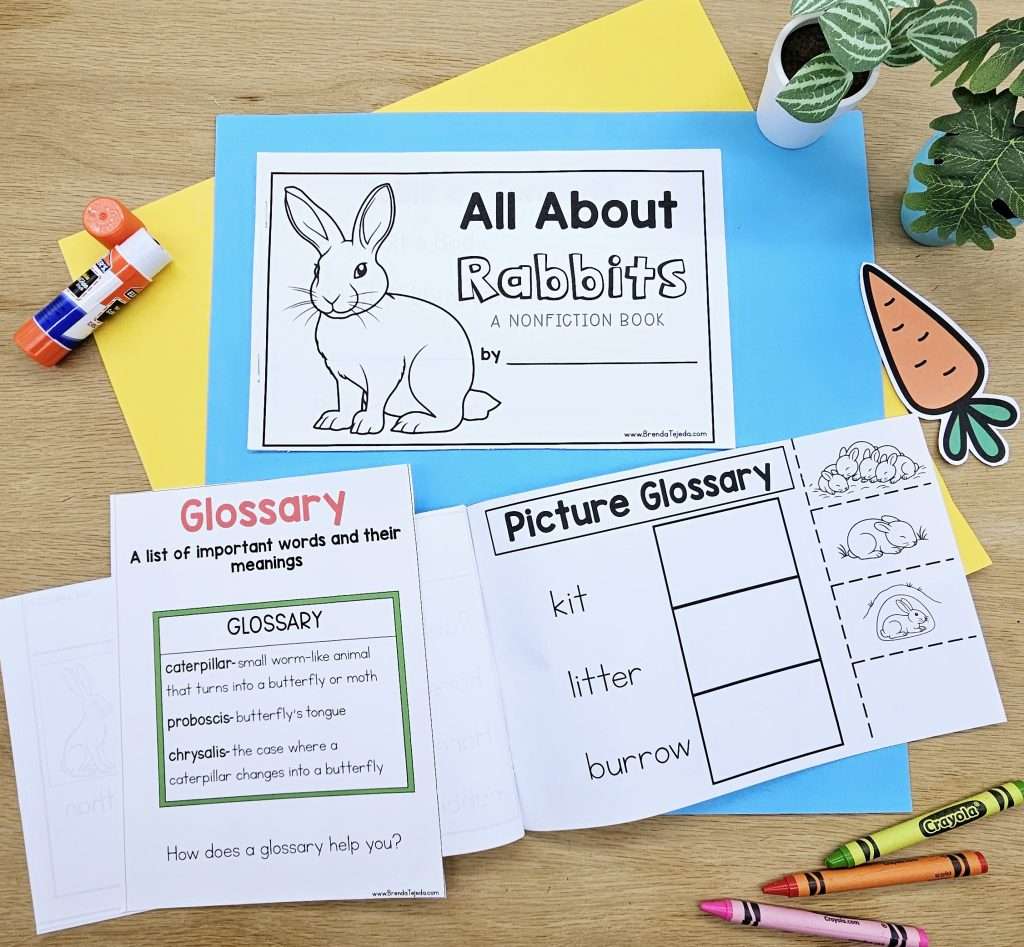
After a few silly bunny stories, I love bringing in this nonfiction pick to balance things out. It’s a great opportunity to make connections and teach about nonfiction text features.
Follow-up ideas:
- Have students write one rabbit fact and one opinion.
- Make a fact vs. fiction chart comparing what students learned from this book vs. what they see in Easter bunny stories.
- Nonfiction text features! See below
6. Michael Recycle by Ellie Bethel
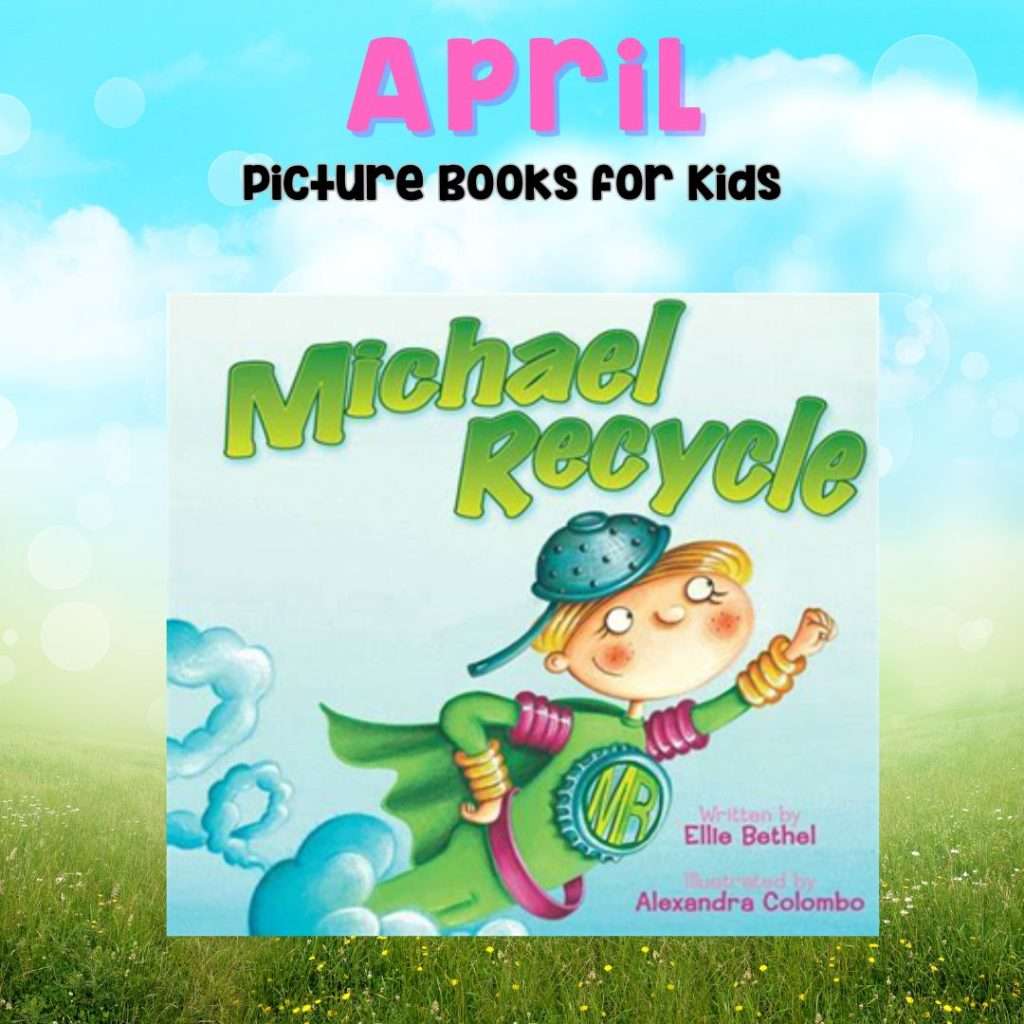
A rhyming superhero story that gets kids excited about helping the planet! This one’s perfect for Earth Day and also leads into discussions about cause and effect.
Follow-up ideas:
- Chart and match causes and effect examples from the book.
- After reading, have students create their own eco-superhero and write about what their powers would be!
- Discuss character traits and have students write some about Michael Recycle.
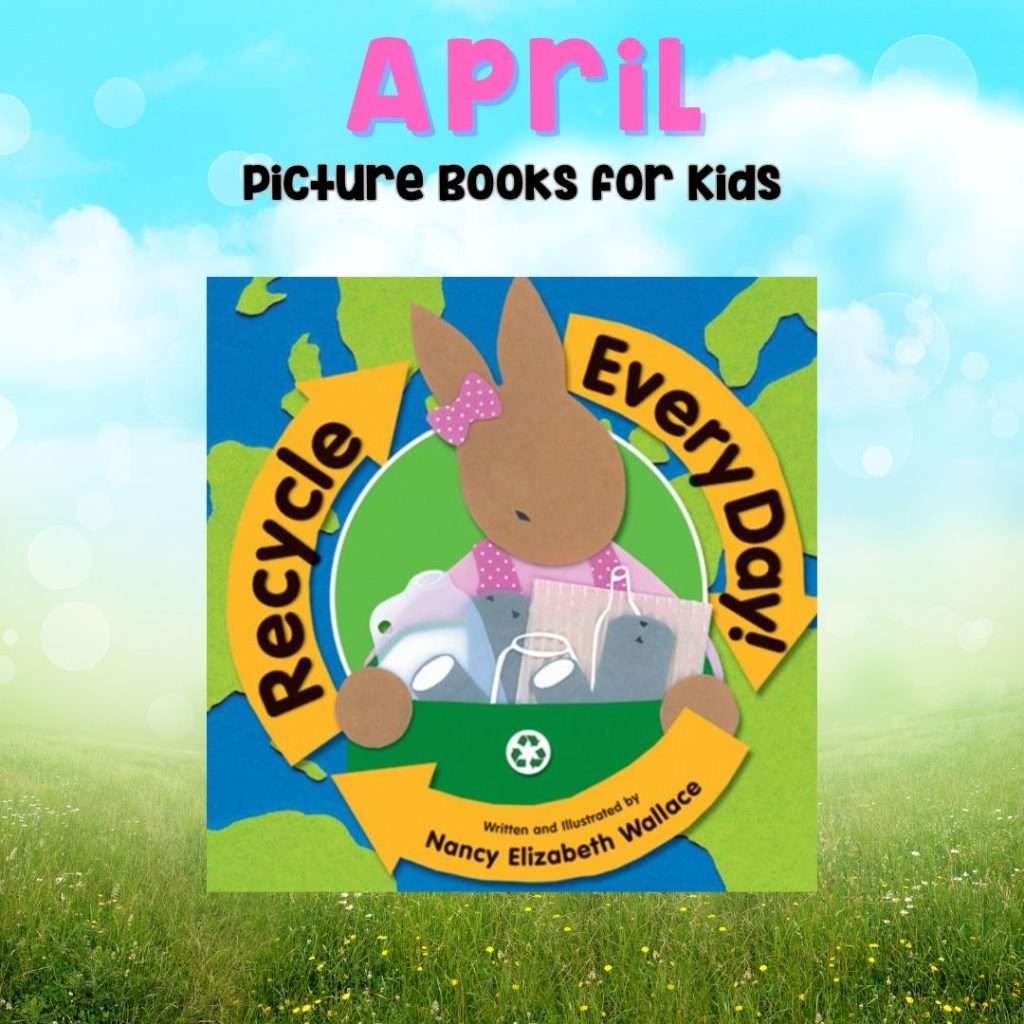
7. Recycle Every Day! by Nancy Elizabeth Wallace
This is a great companion to Michael Recycle. It shows practical ways to reduce, reuse, and recycle—things students can actually do at home and at school.
Follow-up ideas:
- Have students write or draw one way they can help the Earth.
- Sort pictures or objects into different recycling categories.
- Make a poster to hang up in the community!
8. Quick as a Cricket by Audrey Wood
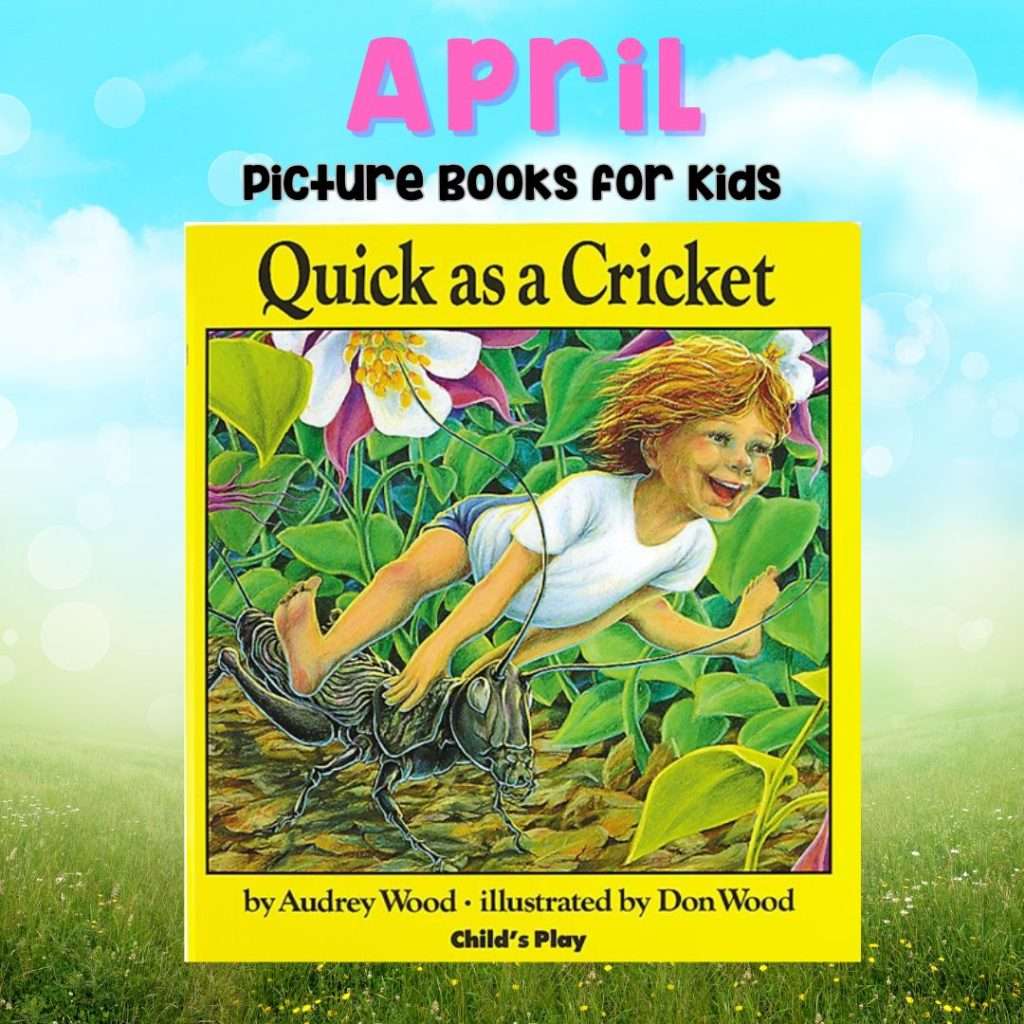
Not a traditional poem, but it definitely has poetic elements, so it qualifies for poetry month! It’s a great book when you’re working on describing words or character traits. The pattern and structure are easy to follow, and students love coming up with their own comparisons.
Follow-up ideas:
- Use the book as a springboard for a lesson on similes or feeling words.
- Have each student write their own “I’m as ___ as a ___” page and create a class book.
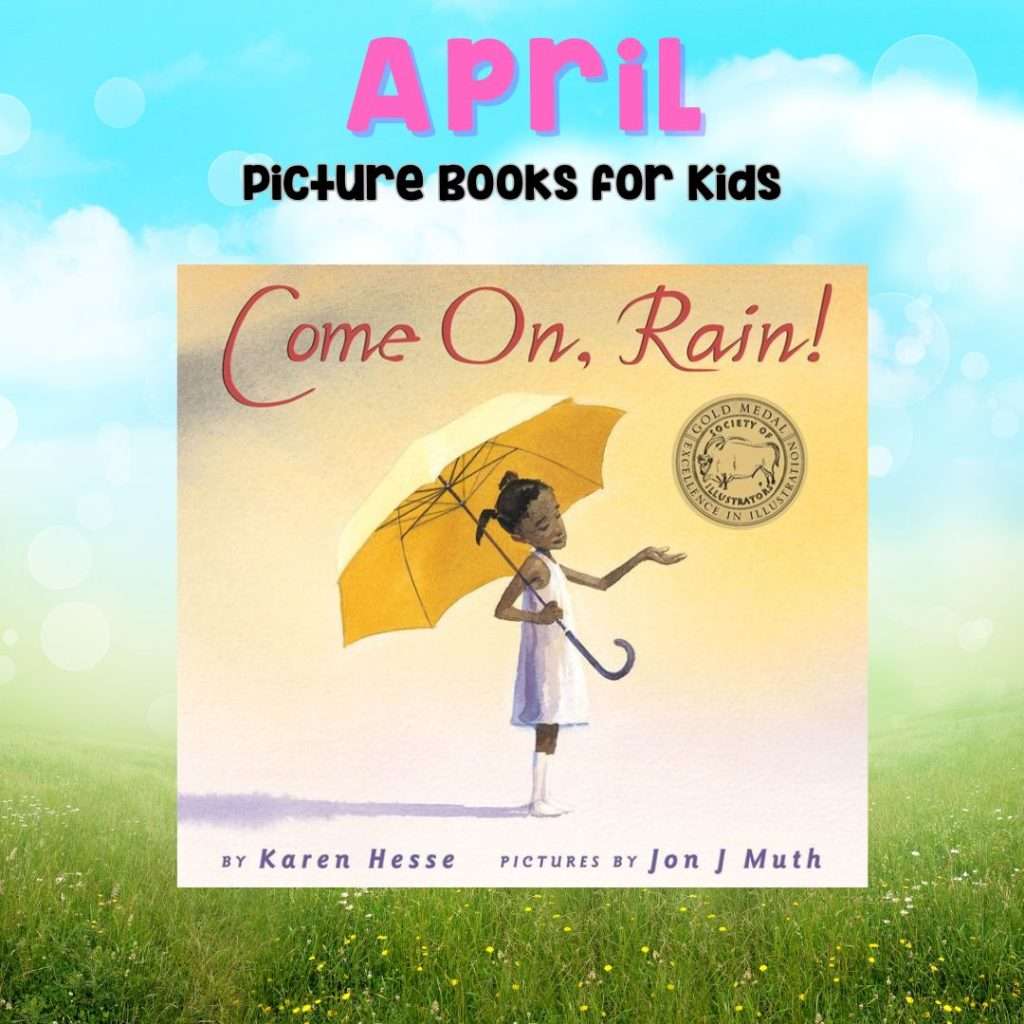
9. Come On, Rain! by Karen Hesse
This one is just beautiful. The language is rich and descriptive, and I could use almost every sentence as a mentor text! It’s great for talking about setting, mood, or sensory details!
Follow-up ideas:
- Let students illustrate their rainy day scene using watercolors or tissue paper.
- Do a shared writing piece describing what it feels like to be caught in the rain.
10. April Foolishness by Teresa Bateman
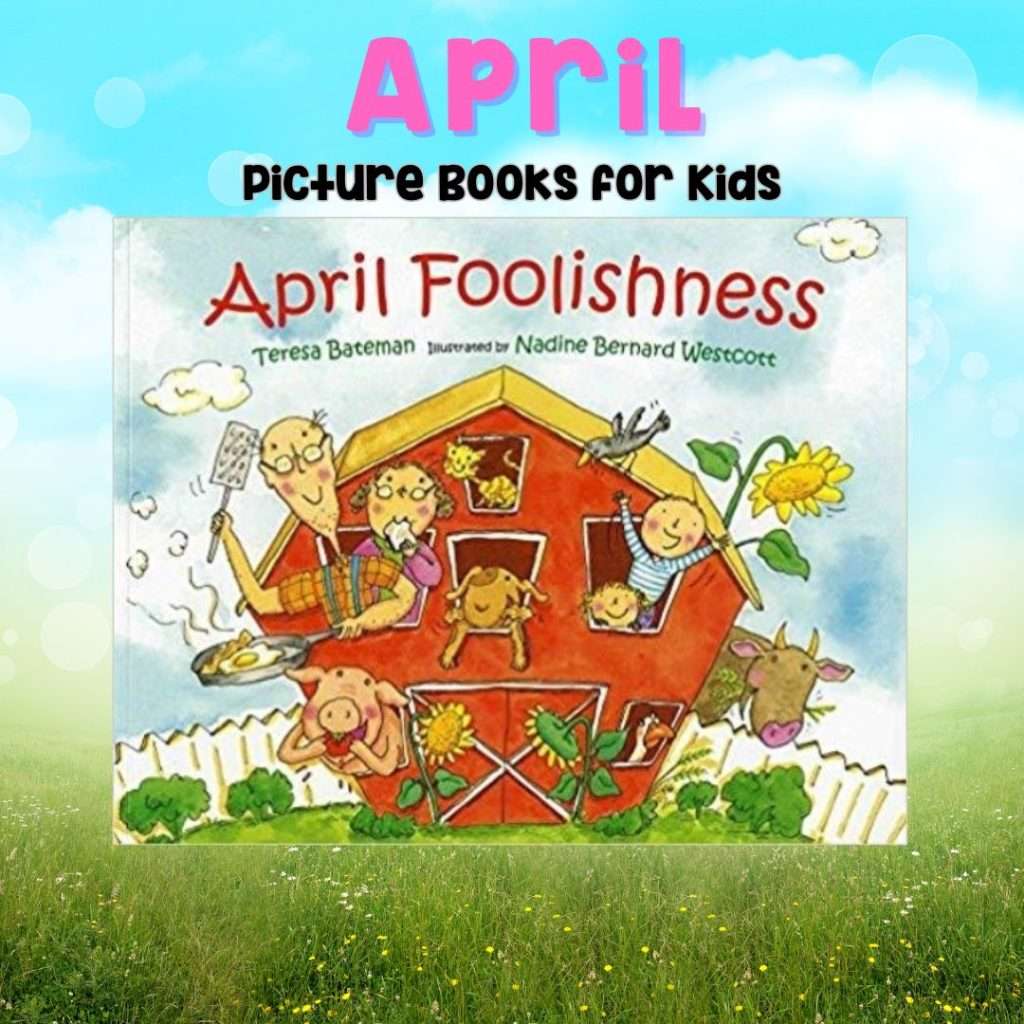
This one probably should’ve been first since it’s for April 1st! In this silly story, the grandkids rush in to warn Grandpa about animals causing chaos on the farm—but Grandpa doesn’t seem too concerned.
The twist ending is always a hit and makes this book great for practicing making inferences and of course, discussing what makes a good prank vs. a not-so-good one!
Follow-up ideas:
- Sort fun pranks vs not pranks and discuss why.
- Have students write or draw their own April Fools’ Day prank story—real or imagined!
- Play a few fun pranks on your students!
Want everything ready to go?
If you’re short on time (because when aren’t we?), I’ve got you covered. My April Read-Alouds Pack includes everything you need to teach these books without starting from scratch.
Take a peek below and view some of the activities included HERE.



Leave a Reply